
Africa is a continent of superlatives, and Tanzania sits at its apex. Nestled along the eastern coast of sub-Saharan Africa, Tanzania safaris Africa is the continent’s safari crown jewel — a land where ancient ecosystems still function as nature intended, where the horizon stretches unbroken across golden savannah, and where the air at dawn carries the distant roar of lions returning from a night’s hunt. For travelers seeking a genuine encounter with wild Africa, no destination delivers more consistently, more dramatically, or more memorably than Tanzania.
Tanzania’s relationship with conservation is foundational to its identity. The government has set aside nearly 38% of the country’s total landmass as protected areas — national parks, game reserves, wildlife management areas, and conservation zones. This extraordinary commitment has preserved habitats that elsewhere in Africa have been lost to agriculture, urbanization, and poaching pressure. The result is a wildlife theater of unrivaled scale: over 4 million large mammals, more than 1,000 bird species, and ecosystems ranging from high-altitude alpine desert to Indian Ocean coral reefs.
The safari experience in Tanzania and Kenya safaris Africa is not merely about checking animals off a list. It is about bearing witness to the oldest story on Earth — predator and prey, drought and abundance, birth and death — played out across landscapes that feel unchanged since the dawn of humanity. This guide covers everything you need to plan an extraordinary Tanzanian safari adventure, from the legendary parks to the best seasons, budget considerations, cultural encounters, and expert advice.
Tanzania’s Safari Landscape: An Overview
Tanzania and Rwanda safaris Africa geography is staggeringly diverse. The country is bordered by the Indian Ocean to the east, the Great Rift Valley running through its heart, Africa’s highest peak (Mount Kilimanjaro at 5,895 meters) in the northeast, and the vast freshwater expanse of Lake Victoria to the northwest. This geographic variety gives rise to an equally varied range of habitats — open savannah, acacia woodland, montane forest, floodplains, and coastal mangroves — each supporting distinct communities of wildlife.
The famous northern safari circuit, anchored by the Serengeti and Ngorongoro, draws the majority of international visitors and delivers some of Africa’s most celebrated wildlife encounters. The less-visited southern circuit, centered on Nyerere National Park (formerly Selous Game Reserve) and Ruaha National Park, offers a more immersive, crowd-free alternative that serious safari travelers increasingly favor. In between, parks like Tarangire, Lake Manyara, and Katavi serve as exceptional destinations in their own right.
The Premier Safari Parks of Tanzania
Serengeti National Park
The Serengeti requires no introduction. Covering 14,763 square kilometers of open plains, riverine forest, and rocky kopje, it is the oldest and most celebrated national park in Tanzania — and one of the most iconic protected areas on the planet. The Serengeti supports the world’s largest lion population, along with vast herds of elephant, enormous concentrations of zebra and wildebeest, and impressive numbers of cheetah and leopard.
The park’s defining spectacle is the Great Migration. Driven by rainfall patterns and the relentless search for fresh grazing, over 1.5 million wildebeest undertake an annual circular journey across the Serengeti-Mara ecosystem. The drama peaks at river crossings — particularly at the Mara and Grumeti Rivers — where massive crocodiles ambush the herds as they plunge into churning waters. These crossings are unpredictable, chaotic, and absolutely unforgettable.
Game drives in the Serengeti are rewarding in every season. The central Seronera Valley offers year-round productivity thanks to permanent water. The southern plains around Ndutu host extraordinary calving action from December through March. The north, near Kogatende and Lamai, delivers the most dramatic migration crossings from July through October.
Ngorongoro Conservation Area
The Ngorongoro Crater is among Africa’s most astonishing natural formations. Formed when a giant volcano collapsed inward approximately 2–3 million years ago, the resulting caldera — 260 square kilometers in area and 600 meters deep — has become a self-contained wildlife sanctuary of extraordinary density. The crater floor supports an estimated 25,000 large mammals, including lions, elephants, hippos, hyenas, flamingos, and one of Africa’s last viable populations of critically endangered black rhinoceros.
Beyond the crater, the Ngorongoro Conservation Area encompasses highland forests, the Olduvai Gorge (one of the most important paleoanthropological sites in the world, where early human fossils have been discovered), and vast Maasai-inhabited landscapes. The co-existence of wildlife, Maasai pastoralists, and archaeological heritage within a single managed area makes Ngorongoro genuinely unlike anywhere else on Earth.
Tarangire National Park
Tarangire and Uganda safaris Africa is the Serengeti’s quieter, more intimate counterpart — and one of Tanzania’s most underappreciated gems. During the dry season, the Tarangire River acts as a wildlife magnet, drawing one of Africa’s greatest concentrations of elephants to its banks. Herds of 200 or more are not uncommon, moving through a landscape punctuated by ancient baobab trees whose swollen, cathedral-like trunks can reach 25 meters in circumference.
Tarangire is also a world-class birding destination. Over 550 species have been recorded here, including rare endemics like the Ashy Starling and Yellow-collared Lovebird. The park’s varied habitats — swamps, acacia scrub, open savannah, and dense woodland — support exceptional biodiversity that rewards extended visits.
Nyerere National Park (Selous Game Reserve)
Renamed in 2019 to honor Tanzania’s first president, Nyerere and Bwindi impenetrable forest National Park encompasses the northern portion of what was historically the Selous Game Reserve — one of the largest protected areas in Africa. The park is defined by the Rufiji River system, a vast network of channels, lakes, and floodplains that supports hippos, crocodiles, and a remarkable diversity of waterbirds.
Nyerere is one of the best places in Africa to see African wild dogs (painted wolves), and its lion prides are among the largest on the continent. Unlike the northern parks, Nyerere permits walking safaris and boat safaris, giving visitors a multi-dimensional bush experience that is intimate, unscripted, and deeply immersive.
Ruaha National Park
Tanzania safaris Africa’s largest national park, Ruaha covers over 20,000 square kilometers of remote, semi-arid wilderness in the country’s interior. It is a park of superlatives — the largest lion population in East Africa, significant populations of wild dogs, and both greater and lesser kudu alongside more common plains game. Its remoteness ensures low visitor numbers and an authentic, unspoiled safari atmosphere that is increasingly difficult to find elsewhere.
When to Visit Tanzania
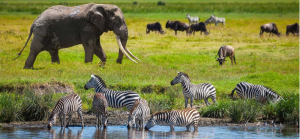
Tanzania’s safari seasons are shaped by rainfall patterns across two wet and two dry periods:
The Long Dry Season (June – October): This is prime safari time. Vegetation is sparse, animals concentrate around water sources, and wildlife viewing is at its most consistent and productive. This is the period for Mara River crossings in the Northern Serengeti and for peak game drive experiences throughout the circuit. Lodges are busy and prices are at their highest.
The Short Dry Season (January – February): One of the best-kept secrets on the safari calendar. The Southern Serengeti and Ndutu area explode with life as wildebeest give birth — up to 8,000 calves per day at the calving season peak. Predator action is extraordinary. Conditions are generally dry and pleasant.
The Short Rains (November – December): Light rains bring freshness to the landscape and drive migratory birds into Tanzania in huge numbers. Wildlife is dispersed but the landscape is strikingly green and photogenic. Fewer tourists and lower rates make this period attractive for budget-conscious travelers.
The Long Rains (March – May): Heavier rainfall makes some roads impassable and certain parks difficult to navigate. However, rates drop significantly and the few travelers who do visit enjoy an essentially private safari experience.
Beyond the Game Drive: Experiences That Define a Tanzania Safari
Hot Air Balloon Safaris: A sunrise balloon flight over the Serengeti is one of the most iconic experiences in African travel — drifting silently above the plains as dawn breaks and animals begin to stir below. Flights typically last 60–90 minutes and conclude with a champagne breakfast in the bush.
Walking Safaris: Available in Nyerere, Ruaha, and private concessions, guided walking safaris reframe the bush entirely. At ground level, the scale of an elephant footprint, the architecture of a termite mound, and the behavior of dung beetles become as compelling as the Big Five.
Cultural Immersion: Visits to Maasai communities, sessions with Hadzabe hunter-gatherers near Lake Eyasi, and Swahili cultural tours in Stone Town, Zanzibar, add layers of human depth to the wildlife experience.
Zanzibar Extension: Tanzania’s archipelago off the Indian Ocean coast offers pristine white-sand beaches, UNESCO-listed Stone Town, world-class snorkeling and diving, and a rich Swahili cultural heritage. Most visitors fly in on small aircraft from Arusha or Dar es Salaam, making a seamless safari-to-beach transition in under an hour.
Accommodation Across the Spectrum
Tanzania safaris Africa lodging ranges from ultra-luxurious private camps to simple public campsites:
Ultra-Luxury ($1,000–$2,500+/night): Properties like Singita Grumeti, &Beyond Klein’s Camp, and Four Seasons Serengeti deliver world-class service, private game drives, gourmet cuisine, and extraordinary design. These camps typically operate in exclusive private concessions, ensuring exceptional wildlife access and minimal crowds.
Mid-Range ($300–$800/night): A wide range of well-appointed permanent tented camps offer genuine bush immersion, professional guiding, and excellent wildlife access without the ultra-luxury price tag. Operators like Elewana, Lemala, and Sanctuary Retreats offer strong value in this tier.
Budget ($50–$150/day): Public campsites within Tanzania’s national parks allow independent travelers to experience the same ecosystems at a fraction of the cost. Group camping safaris departing from Arusha are widely available and provide a social, affordable introduction to East African wildlife.
Questions & Answers
Q: What is the best park in Tanzania for first-time safari visitors? A: The Serengeti and Ngorongoro Crater combination is the classic first-timer choice. The Serengeti’s sheer wildlife density and the crater’s self-contained ecosystem virtually guarantee exceptional sightings, and the infrastructure caters well to those new to safari travel.
Q: How much does a Tanzania safari cost on average? A: Costs vary enormously. Budget travelers on group camping safaris can expect to pay $150–250 per person per day (including park fees). A comfortable mid-range lodge safari averages $400–800/day. Luxury experiences range from $1,000 to $2,500+ per person per night. International flights are additional.
Q: Is Tanzania safe for tourists? A: Tanzania is considered one of Africa’s most stable and welcoming countries for visitors. Crime affecting tourists is relatively low. Standard precautions — using reputable operators, not displaying valuables, following guide instructions in the bush — are sufficient for most travelers.
Q: Do I need vaccinations to visit Tanzania? A: Yellow fever vaccination is required if arriving from countries with yellow fever risk. Hepatitis A, typhoid, and tetanus vaccinations are widely recommended. Malaria prophylaxis is essential for all visitors. Consult a travel health professional at least six weeks before departure.
Q: Can I visit Tanzania with children? A: Absolutely. Many lodges welcome children and offer specialized junior ranger programs. The minimum age for some activities (walking safaris, balloon flights) varies by operator, so confirm in advance. Tanzania is a deeply rewarding destination for families willing to embrace a slightly more structured itinerary.
Q: How do I get to Tanzania? A: Kilimanjaro International Airport (JRO) near Arusha is the primary gateway for northern circuit safaris. Julius Nyerere International Airport (DAR) in Dar es Salaam serves the southern circuit and Zanzibar connections. Major airlines including Kenya Airways, Ethiopian Airlines, Qatar Airways, and KLM offer connections from most global hubs.
Q: What should I pack for a Tanzania safari? A: Neutral-colored, lightweight clothing (khaki, olive, beige — avoid bright colors and white); a warm fleece or jacket for early morning game drives; quality binoculars; high-SPF sunscreen; insect repellent; a wide-brimmed hat; and a telephoto lens if you are a photography enthusiast. Most camps offer laundry services, so packing light is entirely feasible.
Key Takeaways
- Tanzania protects nearly 38% of its land, including 22 national parks and numerous game reserves, making it one of the most conservation-committed nations on Earth.
- The Great Wildebeest Migration — the largest terrestrial animal movement on the planet — sees over 1.5 million wildebeest and 500,000 zebras cycle between the Serengeti and Kenya’s Masai Mara each year.
- The “Big Five” (lion, elephant, buffalo, leopard, and rhinoceros) are all present in Tanzania, with the Ngorongoro Crater offering some of the continent’s best black rhino sightings.
- The northern safari circuit (Serengeti, Ngorongoro, Tarangire, Lake Manyara) is the most visited, while the southern circuit (Nyerere/Selous, Ruaha) delivers remote, exclusive experiences.
- The dry season (June–October) offers peak wildlife visibility; January–March is ideal for the calving season and fewer crowds.
- Zanzibar, Tanzania’s spice island, lies just 45 minutes by air from Dar es Salaam and makes a perfect beach extension to any safari itinerary.
- Walking safaris, boat safaris, and hot air balloon flights over the Serengeti offer unforgettable dimensions beyond the classic game drive.
- Safari costs range widely — from $150/day on budget camping safaris to over $2,500/night at ultra-luxury private camps.
- Sustainable, community-based tourism is integral to Tanzania’s conservation model; choosing responsible operators directly supports wildlife protection and local livelihoods.
Conclusion
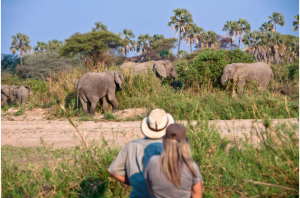
Tanzania safaris Africa not a holiday in the conventional sense. It is an immersion — into wildness, into geological time, into the full, unfiltered drama of the living world. To stand on the edge of the Ngorongoro Crater as the morning mist clears is to understand, viscerally, what it means for a landscape to be ancient. To watch a cheetah mother teaching her cubs to hunt on the Serengeti plains is to witness something that cannot be manufactured, streamed, or replicated — only experienced.
Tanzania’s and Congo safaris conservation success story is also one of Africa’s most inspiring. The communities, rangers, scientists, and policymakers who have preserved these ecosystems against immense economic and demographic pressures deserve acknowledgment and support. Every ethical safari dollar that flows into Tanzania’s parks and surrounding communities contributes directly to the continuation of this success.
As a traveler, your visit matters. Choose operators who employ local guides, who invest in community conservation programs, and who follow responsible wildlife viewing practices. Travel with humility, curiosity, and respect — and Tanzania will reward you with memories that no photograph can fully capture.

