A complete guide to planning, arriving, and embarking on an unforgettable Tanzania safari from Kilimanjaro Airport
Introduction
Every great African safari begins with a moment of arrival — the instant when the aircraft door opens, warm equatorial air rushes in, and the reality of where you are displaces the abstract planning of the preceding months. For the vast majority of Tanzania’s safari travellers, that moment of arrival happens at Kilimanjaro International Airport (KIA), the principal gateway to one of the most extraordinary concentrations of wildlife on Earth.
Situated between the cities of Arusha and Moshi in northern Tanzania, Kilimanjaro International Airport is not merely a transit point. It is the threshold of an entirely different world — one where the five-lane highway gives way to red-dirt tracks through acacia woodland, where the horizon is defined not by buildings but by the summit of Africa’s highest peak, and where the journey from airport arrivals to the first lion sighting can be measured in hours rather than days.
Tanzania’s northern safari circuit — anchored by the Serengeti, Ngorongoro Crater, Tarangire, and Lake Manyara — is directly and efficiently accessible from Kilimanjaro Airport. Understanding how to navigate this gateway, what to expect on arrival, and how to structure your onward safari journey is the first step toward an experience that will define your relationship with the natural world for the rest of your life.
Kilimanjaro International Airport: An Overview
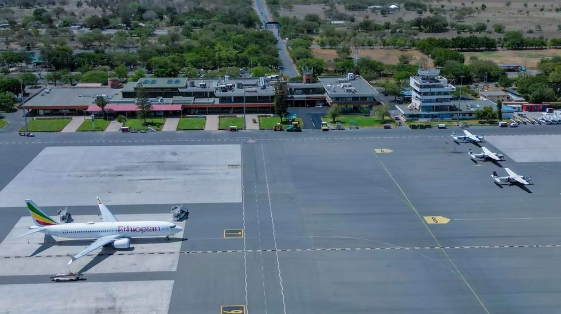
Tanzania safari from Kilimanjaro Airport (IATA: JRO) is located approximately 46 kilometres east of Arusha and 50 kilometres west of Moshi, at an altitude of roughly 896 metres above sea level. On a clear day — which in northern Tanzania means most days between June and October — the snow-capped summit of Mount Kilimanjaro is visible from the airport perimeter, a dramatic and immediate introduction to the scale of the landscape you have entered.
The airport serves direct and connecting international flights from major hubs including Amsterdam (KLM), Doha (Qatar Airways), Addis Ababa (Ethiopian Airlines), Nairobi (Kenya Airways and others), and Dubai (Flydubai). For travellers originating from Europe, North America, or Asia, KIA is typically reached via one or two connections, with total journey times ranging from 12 to 22 hours depending on origin.
The airport operates two terminals. Terminal 2, the international terminal, handles all major international arrivals and is where most safari travellers will first set foot on Tanzanian soil. The facilities are functional, efficient, and increasingly well-equipped — with immigration, baggage claim, currency exchange, and meet-and-greet services all operating reliably for the volume of safari and tourism traffic that KIA handles year-round.
Tanzania operates a visa-on-arrival system for most nationalities, with single-entry tourist visas available for $50 USD at immigration desks. Many nationalities also have the option of applying for an e-visa in advance through the Tanzania Immigration Services portal — a process strongly recommended to reduce arrival formalities and ensure a smoother transition into the country.
From Airport to Safari: The Arusha Connection
The city of Arusha — Tanzania’s northern safari capital and the self-styled “Geneva of Africa” for its role as a diplomatic and treaty hub — lies approximately 46 kilometres west of the airport along a well-maintained highway. For most travellers, Arusha serves as the operational base for the beginning of their safari: the place where drivers and guides are met, vehicles are loaded, briefings are conducted, and the safari proper begins.
Same-Day Departures: Many well-organised safari itineraries are structured to allow for same-day transfers from KIA directly to the first safari destination, bypassing a night in Arusha entirely. Tarangire National Park — one of Tanzania’s finest and most underrated wildlife destinations — is only 118 kilometres from the airport, a journey of approximately two to two and a half hours by road. A morning arrival at KIA with a 10:00 or 11:00 immigration clearance can realistically have a couple or family inside Tarangire for an afternoon game drive, making same-day safari immersion entirely practical for those whose itineraries allow it.
Overnight in Arusha: For travellers arriving on late flights, or those who prefer to begin their safari rested and oriented, Arusha offers a range of excellent accommodation options. Properties such as the Arusha Coffee Lodge — set within a working coffee estate — or Rivertrees Country Inn provide a gentle, atmospheric introduction to northern Tanzania that bridges the gap between international travel and the full wilderness experience of the safari circuit.
Arusha National Park: Often overlooked by travellers eager to reach the Serengeti, Arusha National Park is a remarkably accessible and rewarding destination just 35 kilometres from the city — making it the closest national park to Kilimanjaro Airport. Its landscapes are varied and dramatic: the Ngurdoto Crater, the Momella Lakes (famed for flamingos and waterfowl), and the forested slopes of Mount Meru. Giraffe, zebra, buffalo, black-and-white colobus monkey, and hippo are all reliably seen, and guided canoe safaris on the Momella Lakes offer a unique wildlife perspective. For travellers with a single free morning before joining a multi-day circuit, Arusha National Park is an ideal introduction.

The Northern Circuit: Tanzania’s Crown Jewel, Accessible from KIA
The northern safari circuit — the collection of parks and conservation areas that has made Tanzania famous throughout the world — radiates outward from Arusha and Kilimanjaro Airport with remarkable accessibility. Each destination is connected to KIA either by road or by a network of domestic charter flights operating from Arusha Airport (ARK), a smaller general aviation facility 8 kilometres from the city centre.
Tarangire National Park sits 118 kilometres from KIA and is best known for its extraordinary elephant populations — the largest concentrations in northern Tanzania — and its ancient, iconic baobab trees. During the dry season (June–October), the Tarangire River becomes the only permanent water source for miles, drawing wildlife in spectacular concentrations. Tarangire is frequently underestimated by first-time visitors and consistently overdelivers.
Lake Manyara National Park, 130 kilometres from KIA, is compact but ecologically diverse, offering forest, floodplain, and lake habitats within a single game drive. Its tree-climbing lions are among Tanzania’s most discussed wildlife phenomena, and the alkaline lake draws enormous flocks of flamingos that paint the shallows pink during favourable seasons. Manyara is often the first overnight stop on a classic northern circuit itinerary and provides an ideal warm-up to the larger parks ahead.
Ngorongoro Crater, 180 kilometres from KIA, is the world’s largest intact volcanic caldera and one of the most reliable Big Five destinations in Africa. The descent into the crater — a 600-metre drop into a self-contained ecosystem of extraordinary wildlife density — is one of the defining experiences of any Tanzania safari. Black rhinoceros, resident lion prides, enormous bull elephants, and the flamingo-fringed Lake Magadi all await within the caldera’s ancient walls.
The Serengeti, Tanzania’s most iconic destination, lies between 320 and 400 kilometres from KIA depending on the specific camp location — a journey of five to six hours by road or 45 to 60 minutes by charter flight from Arusha Airport. The Serengeti needs little introduction: its name is synonymous with the African wild, its landscapes are among the most photographed on Earth, and its wildlife spectacle — anchored by the year-round presence of the Great Migration — remains unmatched anywhere on the continent.
For travellers with limited time, the combination of charter flights from Arusha and efficient road transfers from KIA makes it possible to be inside the Serengeti ecosystem within three to four hours of landing at Kilimanjaro Airport — a logistical reality that continues to astonish first-time visitors.
Practical Considerations: Making the Most of Your KIA Arrival
Currency and Payments: US dollars are widely accepted across Tanzania’s safari circuit, and most lodges, camps, and tour operators prefer payment in USD. ATMs are available at KIA and in Arusha, and currency exchange desks in the international terminal offer reasonable rates. It is advisable to arrive with some USD cash for visa fees, tips, and minor purchases.
Health and Vaccinations: Tanzania requires proof of yellow fever vaccination for travellers arriving from endemic countries. Malaria prophylaxis is strongly recommended for all safari destinations in Tanzania. Consult a travel health clinic at least six weeks before departure to ensure appropriate vaccinations and medications are in place.
Luggage: Most light aircraft and charter flights operating between Arusha and the safari parks impose a strict soft-bag luggage limit of 15 kilograms per person. Hard-sided suitcases are not accepted on bush flights. Pack light, use soft duffel bags, and check your specific operator’s baggage policy well in advance.
Time Zone: Tanzania operates on East Africa Time (EAT), which is UTC+3 year-round with no daylight saving adjustment. Travellers from Europe add two to three hours; from the US East Coast, add seven to eight hours. Jet lag adjustment is typically straightforward given the early morning game drive schedules that naturally reset circadian rhythms.
Key Takeaways
| # | Insight |
| 1 | Airport Location: Kilimanjaro International Airport (JRO) is 46 km from Arusha — the primary staging point for Tanzania’s northern safari circuit. |
| 2 | Visa: $50 USD single-entry tourist visa available on arrival; e-visa pre-application strongly recommended for smoother processing. |
| 3 | Same-Day Safari: Tarangire National Park is reachable in under 2.5 hours from KIA — same-day safari immersion is practical for morning arrivals. |
| 4 | Nearest Park: Arusha National Park (35 km from Arusha) is the closest national park to KIA — an excellent half-day option for early arrivals. |
| 5 | Fly vs. Drive: Charter flights from Arusha Airport (ARK) reduce Serengeti travel time from 6 hours by road to under 60 minutes. |
| 6 | Luggage Rules: Bush charter flights enforce a strict 15 kg soft-bag limit — pack accordingly and check operator policies before departure. |
| 7 | Northern Circuit Range: All major northern circuit parks (Tarangire, Manyara, Ngorongoro, Serengeti) are within 400 km of KIA. |
| 8 | Currency: US dollars are the preferred currency across Tanzania’s safari circuit; carry cash for visa fees, tips, and small purchases. |
| 9 | Health Preparation: Yellow fever certificate (if applicable) and malaria prophylaxis are essential — consult a travel health clinic at least 6 weeks before travel. |
| 10 | Best Arrival Strategy: Morning arrival allows same-day transfer to first safari destination; late arrivals are best spent at an Arusha overnight property before departing the following morning. |
Q&A: Tanzania Safari from Kilimanjaro Airport — Your Questions Answered
Q: Which international airlines fly directly into Kilimanjaro Airport?
A: Kilimanjaro International Airport is served by several major international carriers. KLM operates direct flights from Amsterdam; Qatar Airways connects KIA to Doha; Ethiopian Airlines links Addis Ababa to KIA with onward connections across Africa, Asia, and North America; Kenya Airways operates flights via Nairobi; and Flydubai connects KIA to Dubai. For most European travellers, KLM’s direct Amsterdam service offers the most straightforward routing. North American travellers typically route via Amsterdam, Doha, Dubai, or Addis Ababa.
Q: Should I fly or drive from Kilimanjaro Airport to the Serengeti?
A: For most travellers, flying from Arusha Airport to the Serengeti is the preferred option — it reduces a five to six hour overland drive to under 60 minutes and arrives fresh at the lodge with maximum time for game drives. However, the overland route through Ngorongoro Conservation Area is scenically spectacular and offers the opportunity to stop at Ngorongoro Crater en route, making the drive a worthwhile option for those with time. Many itineraries combine driving one way and flying the other, optimising both the journey experience and the use of time.
Q: Is it safe to travel through Arusha to reach the safari circuit?
A: Arusha is a well-established, functional city with a large and experienced tourism infrastructure. Petty crime exists, as in any urban environment, but safari travellers moving between the airport, lodges, and departure points under the management of a reputable operator encounter no meaningful security concerns. Travellers are advised to use operator-arranged transfers rather than independent taxis, keep valuables secure, and follow the standard precautions applicable to any international travel destination.
Q: Can I visit multiple parks on a single itinerary from Kilimanjaro Airport?
A: Absolutely — multi-park itineraries are the standard format for Tanzania safari travel, and the northern circuit is specifically designed to be explored as a connected sequence. A classic seven-night itinerary from KIA might cover Tarangire (two nights), Ngorongoro (two nights), and the Serengeti (three nights), with a mix of road and charter flight transfers between destinations. Longer itineraries can incorporate Lake Manyara, the southern Serengeti (Ndutu), and even the southern circuit parks of Ruaha and Nyerere (Selous) via domestic connections.
Q: What is the best time of year to arrive at Kilimanjaro Airport for a safari?
A: Tanzania’s northern circuit offers exceptional wildlife throughout the year, but the dry season from June to October is generally considered the prime safari period — skies are clear, roads are passable, and wildlife concentrations around permanent water sources are at their most dramatic. January and February offer the extraordinary calving season spectacle in the Ndutu area of the southern Serengeti. The green season (November–December and March–May) brings lush landscapes, fewer visitors, and lower rates, with excellent birdlife and predator activity.
Q: How far in advance should I book my Tanzania safari from Kilimanjaro Airport?
A: For travel during peak season (June–October), booking 12 to 18 months in advance is strongly recommended for the best lodge and camp availability, particularly at sought-after properties in the Serengeti and Ngorongoro. For travel in the shoulder or green seasons, six to nine months is generally sufficient, though earlier booking always offers more choice. Charter flight seats and hot air balloon slots also fill quickly and should be reserved at the time of lodge booking.
Conclusion
Tanzania safari from Kilimanjaro Airport is more than a logistical entry point — it is the beginning of a transformation. Every traveller who has landed at KIA and been met by the warm air, the vast sky, and the distant silhouette of Africa’s highest mountain has felt it: the immediate, instinctive sense that this place is different, that the scale of what lies ahead is unlike anything that normal life has prepared you for.
Tanzania’s northern safari circuit — the Serengeti, Ngorongoro, Tarangire, and the landscapes in between — is among the most accessible of the world’s great wilderness experiences, and Kilimanjaro Airport is the reason why. Within hours of landing, a traveller can be watching elephants move through baobab woodland in Tarangire, standing on the rim of the Ngorongoro Crater with the caldera spread below, or sitting in an open vehicle on the Serengeti plains as the sun rises over a pride of lions.
The distance from airport arrivals to the heart of the African wild is remarkably, wonderfully short. What takes longer — and what Tanzania will give you in full measure, if you let it — is the deeper journey: the one that changes how you see the world, how you understand your place within it, and how you carry the memory of what you witnessed long after the wheels of your homeward flight have lifted from the Kilimanjaro tarmac.

