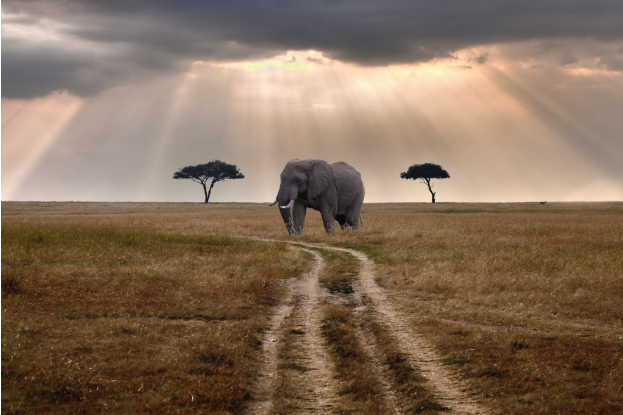
Where the world’s most extraordinary wildlife meets Africa’s most dramatic light — Tanzania’s photographic safari is the journey every serious wildlife photographer dreams of taking.
Introduction
There are landscapes that photographers travel toward with a particular kind of hunger — places where the quality of light, the density of subjects, the scale of the scenery, and the unpredictability of the natural world combine to produce images of a kind unavailable anywhere else on Earth. Tanzania is one of these places. It is, by the assessment of wildlife photographers, photo editors, and conservation visual storytellers worldwide, the single finest photographic safari destination on the African continent — and arguably the finest wildlife photography destination in the world.
The reasons are multiple and mutually reinforcing. The Serengeti’s open savannah provides unobstructed sightlines and the long, golden light of equatorial mornings and evenings that transforms ordinary subjects into extraordinary images. The Ngorongoro Crater concentrates extraordinary wildlife within a navigable enclosed geography, making multi-species compositions achievable within a single frame. Tarangire’s ancient baobab trees provide dramatic natural architecture against which elephant herds and predators are framed in images of primal grandeur. And the Zanzibar Archipelago extends the photographic journey into a different but equally rewarding world of Indian Ocean color, Swahili architectural detail, and marine wildlife encounters of extraordinary visual richness.
Tanzania’s photographic safari is not merely a standard safari with a camera attached. It is a fundamentally different approach to wildlife travel — one that prioritizes light quality over mileage covered, patience over activity, and the perfect single frame over the impressive accumulation of sightings. It requires different vehicles, different timing, different guides, and a different philosophical relationship with the natural world. And when it succeeds — when the light is right and the animal is present and the composition comes together in the viewfinder — it produces images that are, quite simply, among the most beautiful that photography as a medium is capable of delivering.
This article is your complete guide to planning and executing a Tanzania photographic safari — from understanding the light and the seasons to choosing the right equipment, the right vehicles, the right guides, and the right camps that will deliver the photographic access and conditions your craft deserves.
Why Tanzania Is the World’s Premier Wildlife Photography Destination
The Light
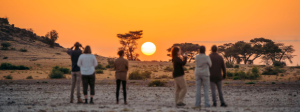
Professional wildlife photographers frequently speak of Tanzania’s light with an almost reverential quality — and for good reason. Tanzania straddles the equator, which means that the sun rises and sets more rapidly and more steeply than at higher latitudes, creating shorter but more intensely golden “magic hour” periods at dawn and dusk. This equatorial golden hour — lasting perhaps forty minutes to an hour in the early morning before the sun lifts to harsher midday angles — bathes the Serengeti’s open plains in a warm, diffused, directional light that is the closest thing to a studio lighting setup that the natural world provides.
During golden hour, the savannah grass glows amber. Dust raised by moving herds becomes luminous against the sky. Animal fur and feathers take on a warmth and texture that midday light flattens entirely. Backlit subjects — a lion walking toward the rising sun, an elephant silhouetted against a dawn sky, a cheetah on a termite mound surveying the plains as light rakes across the landscape — become icons rather than records. Tanzania’s equatorial position makes this extraordinary light available every single morning and evening of every single day of the year, regardless of season.
The Wildlife Density and Diversity
No other terrestrial ecosystem on Earth provides the concentration of large mammal species and individuals that the Serengeti-Ngorongoro ecosystem delivers. Over three million animals move through the greater Serengeti ecosystem annually — wildebeest, zebra, gazelle, lion, leopard, cheetah, elephant, buffalo, giraffe, hippopotamus, crocodile, and over 500 bird species. This density means that photographic subjects are consistently available throughout the day rather than requiring the long, empty drives between sightings that characterize less productive wildlife destinations.
The Great Migration in particular creates photographic opportunities of a scale and drama that exist nowhere else. The Mara River crossings — tens of thousands of wildebeest plunging into crocodile-filled water simultaneously — produce images of raw natural power that have defined the visual vocabulary of wildlife photography for decades. The calving season on the southern plains creates scenes of extraordinary tenderness and predator intensity that require no compositional enhancement from the photographer.
The Open Vehicle Advantage
Tanzania’s photographic safari vehicles — open-topped four-wheel drives with roof hatches for elevated shooting — provide photographic access that is simply unavailable in the closed minibuses used by budget operators. Shooting from an open vehicle at ground level, with a beanbag stabilizing a long telephoto lens on the vehicle roof hatch, delivers the eye-level wildlife perspective that separates professional wildlife images from tourist snapshots. The subject is at your height, not below you. The background is the open savannah or the golden grass, not the roof of a vehicle.
Private photographic safari vehicles — hired exclusively by a single party — add the further critical advantage of driver positioning control. A private guide can stop, reposition, rotate the vehicle for optimal light angle, and remain at a sighting for as long as the photographer requires without the pressure of shared vehicle schedules or other guests’ priorities. For serious photographers, a private vehicle is not a luxury — it is a fundamental requirement of achieving the images that Tanzania’s subjects deserve.
Tanzania’s Premier Photographic Safari Destinations
The Serengeti: The World’s Greatest Wildlife Photography Stage
The Serengeti is the anchor of every Tanzania photographic safari, and no other destination on the continent matches its combination of photographic subject diversity, open landscape visibility, and quality of equatorial light. The park’s different zones offer distinct photographic characters that experienced photo safari operators use strategically:
The Southern Plains and Ndutu (January–March): Calving season on the Ndutu plains creates a photographic spectacle of extraordinary emotional range — the vulnerability of newborn wildebeest and their first faltering steps, the focused intensity of cheetah and wild dog hunts, the tender scenes of predator cubs encountering prey for the first time. The short grass plains provide unobstructed sightlines across vast distances, and the green season vegetation creates a vivid color palette dramatically different from the golden dry-season landscape. Wide-angle environmental shots — a cheetah family in the foreground with the green plains stretching to the horizon — are uniquely achievable during this period.
The Seronera Valley (Year-Round): Africa’s most reliable year-round predator photography corridor. Resident lion prides are habituated to vehicles and approachable to distances that allow intimate, tightly framed portraits of individual animals. Leopard in the sausage trees above the valley’s river courses are among Tanzania’s most sought-after photographic subjects — the combination of spotted coat, green vegetation, and filtered golden light creates images of extraordinary beauty when the cat is present and the light cooperates. The Seronera River’s hippo pools allow extended low-light photography at dawn and dusk when hippos emerge onto the banks.
The Northern Serengeti (August–October): The Mara River crossing season transforms the northern Serengeti into the world’s most intense wildlife photography destination. Patient positioning at the crossing points — sometimes for hours before the crossing begins — rewards the prepared photographer with images of raw natural drama that are impossible to replicate in any other season or location. The northern Serengeti’s kopje-dotted landscape also creates distinctive compositions unavailable in the park’s flatter zones.
Ngorongoro Crater: Concentrated Subjects in a Natural Studio
The Ngorongoro Crater provides photographic safari conditions of a uniquely concentrated intensity. Within 260 square kilometers enclosed by the crater walls — which themselves create dramatic background compositions when incorporated into wide-angle environmental shots — the full range of Tanzania’s iconic species is available within a geographically compact, navigable space.
The crater’s most distinctive photographic subjects include the dark-maned lions that have evolved in genetic isolation within the caldera, the massive tusked bull elephants that traverse the crater floor independently, and the precious black rhinoceros population that grazes on the open grasslands with a frequency of visibility available nowhere else in Africa. The crater’s altitude — the floor sits at 1,700 meters — creates a frequency of atmospheric mist and dramatic cloud that adds a quality of light to the photographic environment unavailable on the lower elevation Serengeti plains.
Tarangire: Baobab Architecture and Elephant Herds
Tarangire provides Tanzania’s most architecturally dramatic photographic landscape — the ancient baobab trees that dominate the park’s interior creating natural frames, silhouette compositions, and environmental context that elevate wildlife photography from documentation to fine art. An elephant herd moving through a grove of thousand-year-old baobabs at golden hour, or a leopard resting in the fork of a baobab branch against the evening sky, creates imagery of a visual richness that the open Serengeti plains, for all their magnificence, cannot replicate.
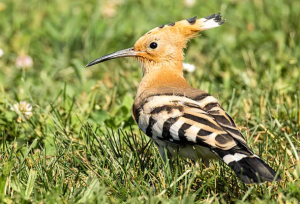
The dry-season elephant convergence on the Tarangire River — hundreds of animals at the water’s edge simultaneously, with the baobab landscape as backdrop — creates photographic opportunities of extraordinary composition and scale. Tarangire’s birdlife, including large populations of dry-country specialists unavailable in the wetter northern parks, adds an ornithological photography dimension that dedicated bird photographers should not overlook.
Zanzibar: Indian Ocean Visual Poetry
For photographic safari travelers extending their Tanzania journey to Zanzibar, the island offers a fundamentally different but equally rewarding photographic chapter. Stone Town’s UNESCO-listed architecture — the carved wooden doors, coral-stone facades, and labyrinthine streets — provides photographic subjects of extraordinary detail and historical resonance. The morning light falling through the narrow alleys of the old town, illuminating a spice vendor’s arrangement of cloves and cinnamon, or catching the brass studs of an ancient carved door — these are images of a different genre from the Serengeti’s wildlife portraits but of equal visual quality.
The beaches, particularly the northern coast at golden hour and the east coast’s dramatic tidal landscapes, provide landscape photography of Indian Ocean beauty. Mnemba Atoll’s underwater world — sea turtles, reef sharks, and the extraordinary coral ecosystems captured with underwater housing — extends the photographic portfolio into the marine environment.
Photographic Safari Equipment: What to Bring
Camera Bodies
A full-frame DSLR or mirrorless system with a fast burst rate — minimum 8 frames per second, ideally 12 to 20 — is the foundation of wildlife photography equipment. The high frame rate is critical for capturing peak action during hunts, river crossings, and bird flight. A second body serves as essential backup and allows simultaneous mounting of different focal length lenses for rapid switching between tight wildlife portraits and wider environmental compositions.
Lenses
The primary wildlife photography lens for Tanzania is a telephoto of 400mm to 600mm — capable of filling the frame with a distant subject while maintaining a safe and non-disruptive distance. A 100-400mm or 200-500mm zoom offers the flexibility to adjust framing as animals move without changing lenses. A 70-200mm serves for environmental compositions where animals and landscapes share the frame. A 24-70mm or wider covers Stone Town architectural photography and Serengeti landscape shots.
Image stabilization is essential for all lenses used handheld or beanbag-mounted from a moving vehicle — even excellent technique cannot compensate for the vehicle vibration that is a constant challenge in photographic safari conditions.
Support Equipment
A quality beanbag — filled at destination to avoid airline weight issues — provides a stable platform for long telephoto lenses resting on the safari vehicle’s roof hatch or window frame, delivering significantly sharper images than handheld shooting. A lightweight travel tripod serves for dawn and dusk low-light shooting from fixed positions. Remote shutter releases eliminate camera shake in stationary setups.
Practical Essentials
High-capacity memory cards in multiples sufficient for at least two full days of high-resolution continuous shooting without downloading. Portable battery chargers — camp power is frequently limited in timing if not capacity. Sensor cleaning equipment for the dust that is an inevitable feature of dry-season Serengeti conditions. Weather-sealing camera bags for the occasional afternoon thunderstorm. And a calibrated laptop or tablet for evening image review and backup to multiple drives — losing a day’s Tanzania wildlife images to a single drive failure is a photographer’s nightmare that simple redundancy entirely prevents.
Choosing the Right Photographic Safari Operator and Guide
The quality of a Tanzania photographic safari is more profoundly determined by the operator and guide than by any other single factor — including equipment, timing, or destination choice. A guide with deep ecological knowledge and genuine photographic understanding does not merely drive animals. They position the vehicle for optimal light angle before the animal arrives. They anticipate behavioral sequences — recognizing the pre-hunt crouch, the pre-crossing river buildup, the pre-flight tension of a landing bird — and respond before the moment rather than after it.
Dedicated photographic safari operators provide guides with specific photographic as well as ecological training, vehicles modified for camera use with multiple roof hatch positions and window mount systems, and itineraries paced for light rather than mileage. They build extended time at productive sightings into their schedules rather than moving continuously. They limit group sizes to two to four photographers per vehicle, ensuring that everyone has the shooting angle and the time they need.
Verify photographic credentials — ask to see sample itineraries, vehicle specifications, and the guide’s own photographic portfolio. The finest photographic safari guides are accomplished photographers themselves, and their images are the most reliable evidence of the access and conditions they provide.
Key Takeaways
- Tanzania is the world’s premier wildlife photography destination — combining equatorial golden-hour light, extraordinary wildlife density, and open landscape visibility in a way no other African country replicates.
- Equatorial golden hour in the Serengeti — approximately forty minutes of warm, directional light at dawn and dusk — is the single most important photographic condition, available every day of the year.
- Private photographic safari vehicles with roof hatches, window mounts, and positioning control are a fundamental requirement for serious wildlife photography — not a luxury upgrade.
- The Serengeti’s different zones offer distinct photographic characters: southern plains for calving season, Seronera Valley for year-round predators, northern Serengeti for Mara River crossings.
- Ngorongoro Crater delivers concentrated Big Five subjects within an enclosed geography — including the rare black rhinoceros and the distinctive dark-maned crater lions — with dramatic cloud and mist light effects.
- Tarangire’s baobab landscape provides Tanzania’s most architecturally dramatic photographic environment — ancient tree silhouettes and elephant herds creating fine art wildlife compositions unavailable elsewhere.
- A telephoto lens of 400mm to 600mm is the primary wildlife photography tool; image stabilization and a high burst rate are non-negotiable requirements.
- A quality beanbag for vehicle-mounted lens stabilization delivers significantly sharper images than any handheld technique — essential for every Tanzania photographic safari.
- Guide photographic expertise — not just ecological knowledge — is the most critical operator selection criterion for a dedicated photographic safari.
- January–February and June–October are the two optimal photographic windows, offering calving season drama and dry-season predator concentration respectively alongside the Serengeti’s consistently extraordinary golden-hour light.
Questions & Answers
Q: What is the single most important piece of advice for a first-time Tanzania wildlife photographer? Prioritize light over subjects. The instinct of first-time safari photographers is to shoot everything immediately — to fill memory cards with any animal encountered at any time of day. Resist this instinct. The middle hours of the day, when the sun is high and the light is harsh and flat, produce technically acceptable but photographically mediocre images regardless of the magnificence of the subject. Instead, reserve your energy and your most attentive shooting for the two to three hours after sunrise and the two hours before sunset — the equatorial golden hours when Tanzania’s light transforms ordinary sightings into extraordinary images. A single lion photographed in perfect golden-hour backlight will produce an image of greater beauty and impact than thirty lions photographed in the harsh midday glare. Patience and light discipline are the hallmarks of accomplished wildlife photography, and Tanzania rewards both with images of exceptional quality.
Q: How much memory card capacity should I bring for a Tanzania photographic safari? The quantity of images generated on an active Tanzania wildlife day — particularly during river crossing season or calving season when continuous burst shooting is constant — is substantially higher than most first-time safari photographers anticipate. A practical minimum is 256 gigabytes of total memory card capacity for a ten-day photographic safari, distributed across multiple cards rather than a single high-capacity card to mitigate the risk of total loss from a single card failure. Shooting in RAW format, as all serious wildlife photographers should, compounds storage requirements — a single high-resolution RAW file from a modern full-frame camera can exceed 30 megabytes, meaning a five-minute burst shooting sequence during a river crossing generates gigabytes of data. Back up to at minimum two separate drives every evening and keep those drives in separate bags during travel.
Q: Is a dedicated photographic safari significantly more expensive than a standard safari? A dedicated photographic safari — with private vehicle hire, modified roof hatch systems, and guides with specific photographic training — typically costs 20 to 40 percent more than a standard safari of equivalent accommodation quality, primarily due to the exclusive vehicle hire and the smaller group sizes that photographic operators maintain. However, the cost differential is substantially justified by the photographic output differential — the difference between shared-vehicle and private-vehicle photography in terms of shooting angle access, positioning control, and time at sightings is vast, and the images produced on a dedicated photographic safari are simply not achievable on a standard shared-vehicle tour. Many photographers find that the incremental cost of a proper photographic safari, amortized over the resulting images and the lifetime of satisfaction those images provide, is the most straightforwardly justified photography expenditure they have ever made.
Q: What are the most common technical mistakes made by first-time Tanzania wildlife photographers? Five technical mistakes recur consistently. First: using shutter speeds too slow to freeze fast-moving wildlife — a minimum of 1/1000th of a second is required for running animals; 1/2000th or faster for birds in flight. Second: setting ISO too conservatively — modern full-frame sensors handle ISO 3200 and even 6400 with image quality that was unachievable five years ago, and a sharp, slightly noisy image is always preferable to a motion-blurred clean one. Third: shooting in JPEG rather than RAW — the post-processing flexibility of RAW files is essential for recovering detail in Tanzania’s challenging high-contrast lighting conditions. Fourth: not calibrating autofocus tracking settings for wildlife — the animal eye detection and subject tracking capabilities of modern mirrorless systems are transformative for wildlife photography but require proper configuration before the safari begins. Fifth: neglecting the background — a technically perfect subject in front of a distracting or poorly chosen background produces a compromised image. Experienced guides position vehicles to manage backgrounds as much as foregrounds.
Q: Can smartphone cameras produce quality images on a Tanzania photographic safari? Modern flagship smartphone cameras have advanced remarkably and are capable of producing excellent images of stationary or slow-moving subjects in good light — a lion resting in the golden hour, an elephant close to the vehicle, a landscape panorama of the Serengeti plains. However, their optical telephoto limitations — equivalent focal lengths rarely exceeding 200mm even on the most advanced current models — make them inadequate for the distant wildlife subjects and the tight behavioral portraiture that define serious Tanzania wildlife photography. Smartphones are genuinely useful as secondary devices for behind-the-scenes documentation, Stone Town architectural photography, and wide-angle landscape capture. As primary photographic tools for dedicated wildlife photography, they remain significantly behind dedicated camera systems with long telephoto lenses. The combination of a serious camera system for wildlife and a flagship smartphone for everything else covers the full photographic range of a Tanzania safari and Zanzibar extension comprehensively.
Q: Are there ethical guidelines for wildlife photography in Tanzania’s national parks? Tanzania’s national parks operate under guidelines that exist to protect wildlife from photographic disturbance, and responsible photographic safari operators enforce these guidelines as a matter of professional standard. Vehicles must maintain minimum distances from animals — typically a minimum of 20 to 30 meters from predators and closer for habituated species — and must not position themselves to block animal movement, interrupt feeding or hunting sequences, or crowd sightings in ways that create stress behavior in wildlife subjects. Flash photography is prohibited near most wildlife as the sudden burst of artificial light disturbs and stresses animals. Off-road driving is restricted to protect ground-nesting birds and sensitive soils. The ethical photographic safari operator understands that the finest wildlife images are produced when animals are relaxed and behaving naturally — and that behavioral disturbance, beyond its ethical dimension, actively degrades the photographic quality of the images it produces. Responsible photography and excellent photography are the same thing.
Conclusion
Tanzania offers the wildlife photographer something that no amount of equipment, technical mastery, or post-processing skill can substitute: subjects of extraordinary beauty in conditions of extraordinary light, accessible through the guidance of people who understand both the ecology of the landscape and the visual requirements of the craft. These three elements — the subjects, the light, and the guidance — are what separate a Tanzania photographic safari from every other wildlife photography experience in the world.
The Serengeti at dawn is not merely a wildlife sighting opportunity. It is a light event of the highest order — forty minutes each morning in which the ordinary rules of photography are suspended and the camera in your hands becomes capable of images that exceed your own expectations of what you can produce. The river crossing is not merely a dramatic wildlife spectacle. It is a photographic experience that tests every technical skill you possess and rewards mastery with images of raw natural power that no studio or set could manufacture.
And the black rhinoceros in the Ngorongoro Crater — ancient, prehistoric, still here against all odds — is not merely a photographic subject. It is a responsibility. The image you make of that animal carries forward, in whatever way images carry things, the visual evidence of that animal’s existence at this particular moment in the history of conservation. Photography in places like the Ngorongoro Crater is witnessed. And witness, in a world where such witnesses are needed, matters enormously.
Go to Tanzania with your best equipment, your fullest technical preparation, and your most patient and attentive photographic discipline. Trust your guide. Honor the light. Respect the subjects. And bring home images that are worthy of the extraordinary world that produced them.

