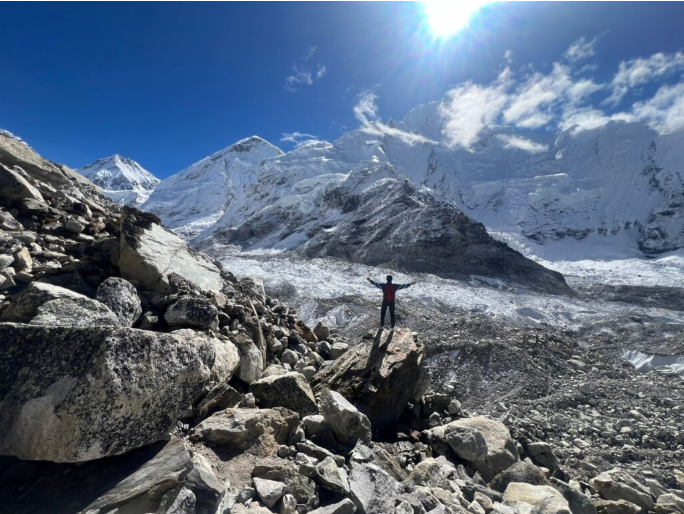
The Everest Base Camp Trek is one of the most iconic trekking adventures in Nepal, offering an incredible combination of Himalayan scenery, Sherpa culture, mountain villages, and unforgettable views of Mount Everest. For many travelers, reaching Everest Base Camp is a once-in-a-lifetime achievement.
Before starting the journey, one of the most important things to understand is the Everest Base Camp Trek Distance. Knowing how far you will walk each day can help you prepare physically, choose the right itinerary, and set realistic expectations for the trek.
The total distance can vary depending on the route, side trips, acclimatization hikes, and transportation arrangements. A classic route from Lukla to Everest Base Camp and back is commonly around 120–130 kilometers (75–81 miles) of trekking.
How Long Is the Everest Base Camp Trek Distance?
The standard round-trip trekking distance is approximately 120–130 km (75–81 miles). This figure can vary between itineraries because some routes include additional acclimatization hikes or alternative trails.
The distance may not sound extreme when compared with long-distance hiking routes at lower elevations. However, the Everest Base Camp Trek becomes significantly more demanding because much of the walking takes place at high altitude.
Trekkers typically spend several hours walking each day, with the trail involving steep climbs, descents, rocky paths, stone steps, and uneven mountain terrain.
Everest Base Camp Trek Distance by Day
A typical itinerary divides the distance into manageable daily sections. An example of the trekking distances is:
| Trekking Section | Approx. Distance |
| Lukla to Phakding | 7–9 km |
| Phakding to Namche Bazaar | 10–12 km |
| Namche acclimatization hike | 3–6 km |
| Namche Bazaar to Tengboche | 9–11 km |
| Tengboche to Dingboche | 10–12 km |
| Dingboche acclimatization hike | 4–6 km |
| Dingboche to Lobuche | 10–12 km |
| Lobuche to Gorak Shep | 7–9 km |
| Gorak Shep to Everest Base Camp and back | 7–9 km |
| Gorak Shep to Kala Patthar and onward descent | Varies |
| Return journey to Lukla | Varies |
These figures are approximate because the actual distance depends on the specific trail, accommodation location, and itinerary chosen.
Lukla to Namche Bazaar Distance
The first major section of the Everest Base Camp Trek takes you from Lukla toward Namche Bazaar.
The journey is usually divided into two days. The first day involves a relatively shorter walk toward Phakding, while the following day takes you through forests, villages, suspension bridges, and the entrance area of Sagarmatha National Park before reaching Namche Bazaar.
The approach to Namche includes a substantial uphill section, making the day’s walking more challenging than the distance alone might suggest.
Namche Bazaar to Tengboche Distance
After an acclimatization day in Namche Bazaar, the trail continues toward Tengboche.
This section generally covers around 9–11 kilometers, depending on the route. The trail provides beautiful views of the surrounding mountains and passes through forests and traditional settlements.
Tengboche is particularly famous for its monastery and spectacular Himalayan surroundings.
Tengboche to Dingboche Distance
The route from Tengboche to Dingboche is generally around 10–12 kilometers.
As you move higher, the landscape gradually changes. Dense forests become less common, and the environment becomes more alpine and rugged.
Because you are gaining considerable elevation, maintaining a comfortable pace is more important than trying to cover the distance quickly.
Dingboche to Lobuche Distance
The journey from Dingboche to Lobuche is approximately 10–12 kilometers.
At this point, trekkers are walking at a significantly higher altitude, and the reduced oxygen level can make even moderate distances feel difficult.
The trail passes through dramatic mountain scenery and continues toward the upper Khumbu Valley.
Lobuche to Everest Base Camp Distance
One of the most exciting sections of the trek is the journey from Lobuche toward Everest Base Camp.
Trekkers generally travel through Gorak Shep before continuing toward Base Camp. The route to Everest Base Camp involves rocky terrain and sections alongside the Khumbu Glacier.
Although the distance is manageable, the high elevation makes this day physically demanding. Reaching Everest Base Camp is a major milestone for trekkers and one of the highlights of the entire adventure.
Everest Base Camp to Kala Patthar
Many trekkers add a hike to Kala Patthar to their itinerary. While Kala Patthar is not part of the direct Base Camp route, it is one of the most popular viewpoints in the region.
The hike is often started early in the morning to enjoy panoramic views of Mount Everest and the surrounding peaks.
The additional distance depends on your exact route and accommodation arrangements, but the steep ascent makes this section challenging despite its relatively short length.
Why Distance Feels Different at High Altitude
A major misconception about the Everest Base Camp Trek Distance is that the journey should be easy because the total number of kilometers is not exceptionally high.
At high altitude, however, the body receives less oxygen. Walking uphill while carrying a backpack can therefore require considerably more effort than the same distance at lower elevation.
For this reason, a 10-kilometer trekking day in the Everest region can feel much harder than a 10-kilometer walk at sea level.
This is also why a well-planned itinerary should focus on gradual elevation gain, rest, and acclimatization rather than simply minimizing the number of trekking days.
How Many Hours Do You Walk Each Day?
Most trekking days involve approximately 5 to 8 hours of walking, although the exact duration depends on the route, elevation gain, weather, individual fitness, and pace.
Some days may be shorter, while days involving Everest Base Camp or Kala Patthar can feel more demanding.
The goal should not be to walk as quickly as possible. Maintaining a slow and consistent pace allows you to conserve energy and enjoy the scenery.
How to Prepare for the Trekking Distance
Physical preparation can make the Everest Base Camp Trek considerably more enjoyable.
Before your trip, consider incorporating:
- Long-distance walks
- Weekend hikes
- Uphill and downhill training
- Stair climbing
- Cardiovascular exercises
- Leg and core strengthening
- Hiking with a light backpack
- Consecutive-day walking practice
Gradually increase your walking distance and elevation rather than attempting very long hikes immediately.
Importance of Acclimatization
Acclimatization is one of the most important aspects of completing the Everest Base Camp Trek successfully.
A good itinerary normally includes acclimatization days at places such as Namche Bazaar and Dingboche. These days allow your body to adapt to the increasing altitude.
Acclimatization days may include short hikes, meaning you still cover some distance while sleeping at the same elevation.
If you experience persistent or worsening symptoms associated with altitude, it is important to take them seriously and seek appropriate medical assistance. Descending to a lower elevation may be necessary in serious situations.
Key Points to Remember
When planning the Everest Base Camp Trek Distance, keep these points in mind:
- The classic round-trip trekking distance is roughly 120–130 km (75–81 miles).
- The exact distance varies according to the route and itinerary.
- Most trekking days involve several hours of walking.
- High altitude makes the distance more physically demanding.
- Steep ascents and descents can be more challenging than the number of kilometers suggests.
- Acclimatization days are essential for adapting to elevation.
- Good physical preparation can significantly improve your experience.
- A steady pace is better than trying to walk quickly.
- Weather and trail conditions can affect daily walking times.
- Extra hikes, such as Kala Patthar, can increase the total distance.
Conclusion
The Everest Base Camp Trek is a challenging yet rewarding Himalayan adventure. The Everest Base Camp Trek Distance is typically around 120–130 kilometers for the classic round trip, but the real challenge comes from altitude, steep terrain, changing weather, and consecutive days of trekking.
Understanding the distance before your journey allows you to prepare properly and choose an itinerary that matches your fitness and experience. Rather than focusing only on the total kilometers, it is important to consider daily walking time, elevation gain, acclimatization, and trail conditions.
With appropriate training, a comfortable pace, proper acclimatization, and a well-planned itinerary, the distance becomes a manageable part of an incredible journey through the Everest region. The reward is not only reaching Base Camp but experiencing the villages, culture, landscapes, and mountains along the entire trail.

